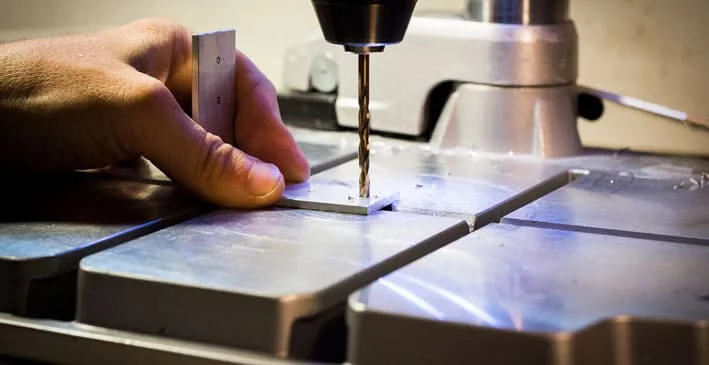
When working with metal, wood, or plastic, precision tools play a critical role in achieving accurate results. Two commonly used cutting tools in machining and fabrication are reamers and drill bits. While they may appear similar at first glance, they serve distinct purposes and are used at different stages of the machining process. Understanding the difference between reamer and drill bit bit is essential for anyone involved in manufacturing, engineering, or DIY projects.
What Is a Drill Bit?
A drill bit is a cutting tool used to create holes in various materials. It is typically used with a drilling machine or handheld drill and is designed to remove material quickly.
Drill bits come in many shapes and sizes, but the most common type is the twist drill bit. It features spiral flutes that help remove chips from the hole as it is being drilled. Drill bits are widely used because they are versatile and efficient for creating initial holes.
Key Features of Drill Bits
- Designed for fast material removal
- Available in a wide range of sizes and types
- Can be used on materials like wood, metal, plastic, and masonry
- Typically creates holes with moderate accuracy and surface finish
However, drill bits are not known for producing perfectly smooth or highly precise holes. This is where reamers come into play.
What Is a Reamer?
A reamer is a finishing tool used to refine and slightly enlarge an already drilled hole. Unlike drill bits, reamers remove a very small amount of material, resulting in a smoother surface and more accurate hole dimensions.
Reamers are commonly used in applications where precision is critical, such as in automotive, aerospace, and mechanical engineering industries.
Key Features of Reamers
- Used for finishing and sizing holes
- Removes minimal material
- Produces highly accurate and smooth holes
- Available in hand reamers and machine reamers
Reamers cannot create a hole from scratch; they require a pre-drilled hole to function effectively.
Core Differences Between Reamer and Drill Bit
Although both tools are used in hole-making processes, their functions and outcomes differ significantly.
1. Purpose
The most fundamental difference lies in their purpose. A drill bit is used to create a hole, while a reamer is used to refine that hole to precise dimensions.
- Drill Bit: Initial hole creation
- Reamer: Finishing and sizing
2. Material Removal
Drill bits remove a large amount of material quickly. In contrast, reamers remove only a thin layer, typically a fraction of a millimeter.
- Drill Bit: Heavy material removal
- Reamer: Light finishing cuts
3. Accuracy
Drill bits are not designed for high precision. The holes they produce may vary slightly in diameter and may not have a perfectly smooth finish.
Reamers, on the other hand, are specifically designed for accuracy. They ensure tight tolerances and consistent hole sizes.
- Drill Bit: Moderate accuracy
- Reamer: High precision
4. Surface Finish
The surface finish of a drilled hole is usually rough compared to a reamed hole.
- Drill Bit: Rough or uneven finish
- Reamer: Smooth and polished finish
5. Design and Structure
Drill bits typically have sharp cutting edges and deep flutes to remove material efficiently. Reamers have multiple cutting edges and shallow flutes designed for fine finishing.
- Drill Bit: Aggressive cutting edges
- Reamer: Multiple fine cutting edges
6. Usage Sequence
In most machining operations, a drill bit is used first, followed by a reamer.
- Drill the hole slightly smaller than the desired size
- Use a reamer to achieve the exact diameter and finish
Types of Drill Bits
Understanding the different types of drill bits helps clarify their versatility:
- Twist Drill Bits: General-purpose drilling
- Spade Bits: Used for wood
- Masonry Bits: Designed for concrete and brick
- Step Bits: Ideal for thin materials
- Brad Point Bits: Provide precise positioning in wood
Each type is designed for specific materials and applications, making drill bits highly adaptable tools.
Types of Reamers
Reamers are more specialized and are categorized based on their application:
- Hand Reamers: Used manually for small-scale work
- Machine Reamers: Used with machines for precision tasks
- Adjustable Reamers: Can be adjusted for different hole sizes
- Chucking Reamers: Used in lathes or drill presses
- Taper Reamers: Designed for tapered holes
These variations allow reamers to meet specific industrial and engineering requirements.
When Should You Use a Drill Bit?
You should use a drill bit when:
- You need to create a new hole
- Speed is more important than precision
- The hole does not require tight tolerances
- You are working on general construction or DIY tasks
Drill bits are ideal for rough work where exact measurements are not critical.
When Should You Use a Reamer?
A reamer is the right choice when:
- You need precise hole dimensions
- The surface finish must be smooth
- Components need to fit perfectly (e.g., shafts, bolts, bearings)
- You are working on high-precision engineering tasks
Reamers are essential in industries where even slight deviations can lead to functional issues.
Advantages of Drill Bits
- Fast and efficient
- Versatile across materials
- Widely available and affordable
- Easy to use
Limitations of Drill Bits
- Lower accuracy
- Rough surface finish
- May require additional finishing
Advantages of Reamers
- High precision and accuracy
- Smooth surface finish
- Ideal for tight tolerances
- Enhances component fit
Limitations of Reamers
- Cannot create holes independently
- Slower process
- Requires pre-drilled holes
- More specialized and sometimes costly
Practical Example
Imagine you are assembling a mechanical component where a metal shaft must fit perfectly into a hole.
- If you use only a drill bit, the hole may be slightly oversized or rough, causing improper fitting.
- If you follow up with a reamer, the hole becomes smooth and precisely sized, ensuring a perfect fit.
This example highlights why both tools are often used together rather than as substitutes.
Common Mistakes to Avoid
- Skipping the reaming process: This can lead to poor fitting and reduced performance
- Using a reamer on an unprepared hole: Reamers are not designed to remove large amounts of material
- Choosing the wrong size drill bit: Always drill slightly smaller before reaming
- Applying excessive force: Both tools require controlled operation for best results
Conclusion
While drill bits and reamers may seem similar, they serve entirely different purposes in machining and fabrication. A drill bit is your go-to tool for creating holes quickly, while a reamer ensures those holes meet precise specifications and have a smooth finish.
In many applications, especially in engineering and manufacturing, using both tools together is essential for achieving optimal results. By understanding their differences, strengths, and limitations, you can choose the right tool for your project and ensure both efficiency and accuracy.
Whether you are a professional machinist or a DIY enthusiast, mastering the use of drill bits and reamers will significantly improve the quality of your work.